
Saturday at the neighbourhood market
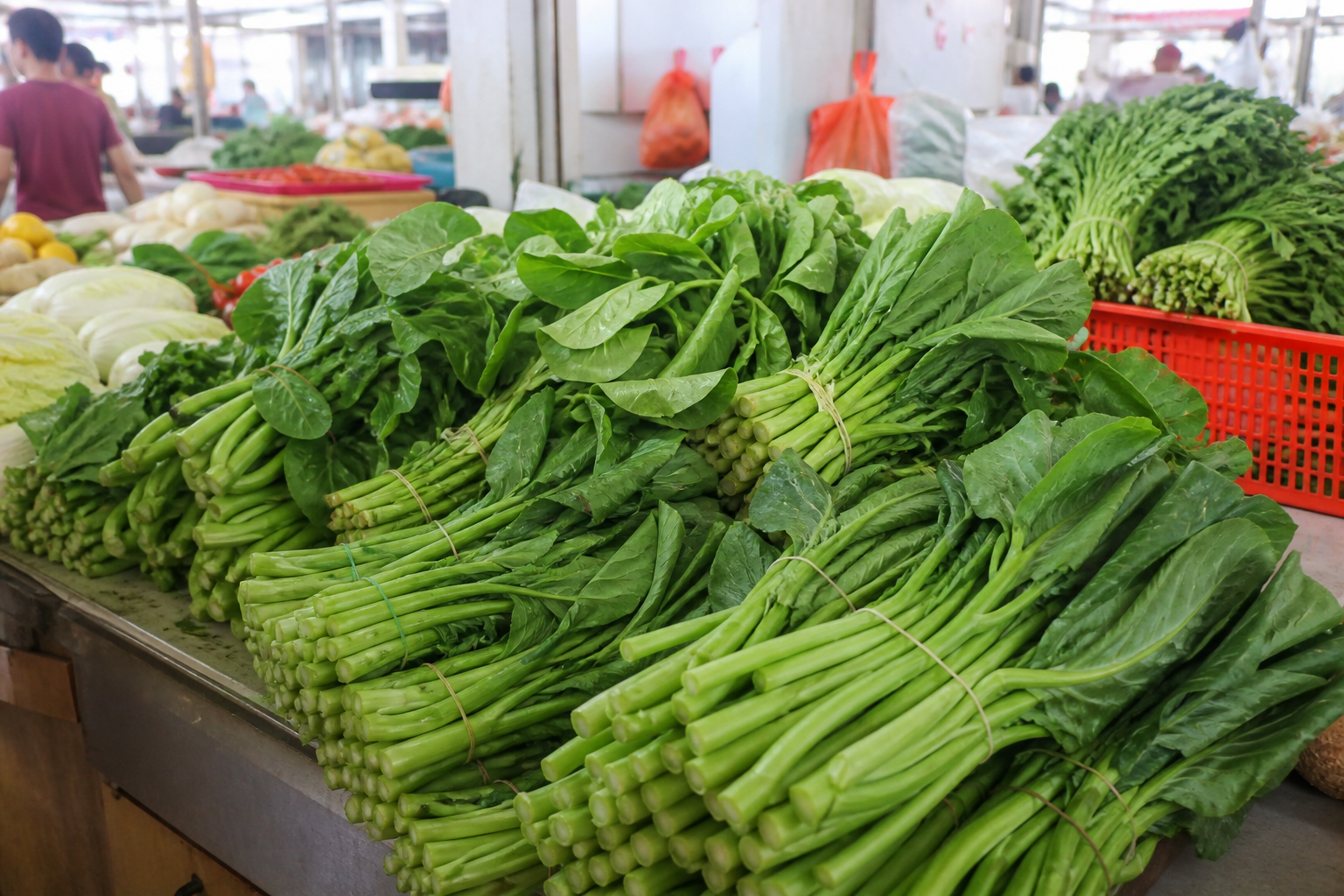
Every Saturday I walk the same route to the market with a canvas bag and no list — trusting that the stalls will tell me what the week requires.
The market sits at the edge of the estate like a weekly festival that forgot to announce itself. By eight-thirty the walkways are already crowded with aunties comparing prices, fathers carrying children on shoulders, and the occasional tourist who wandered in search of something more authentic than a mall food court. I love the democracy of it — everyone needs vegetables, everyone queues, everyone learns patience whether they arrived with it or not.
My ritual is deliberate but not rigid. I begin at the fruit stall run by a couple who remember that I prefer papaya slightly underripe. We exchange greetings in a mixture of English and the little Mandarin I am still ashamed not to speak better. They point me toward what arrived fresh from Malaysia that morning. I trust their hands more than my eyes.
The vegetable section requires more time. Choy sum must be examined stem by stem — too yellow at the edges means it sat out overnight; too stiff means it will taste of disappointment in stir-fry. I move slowly while others push past, and I no longer apologise for taking the space I need. Slowness at a market is a form of respect for the food and for the people who grew it.
What I cannot capture in a shopping list is the social fabric. The fishmonger who warns me when the snapper is not worth the price today. The uncle selling eggs who slips an extra into my bag because I helped his wife carry a crate last month — an exchange I had nearly forgotten. The teenager at the tofu stall who is always reading a novel between customers, proof that literature survives in unlikely corners.
I think often about how supermarkets optimise for speed while markets optimise for relationship. Both have their place. But on Saturdays I choose relationship — the slight inefficiency of conversation, the unpredictability of what will be available, the sensory overload of ice melting on seafood counters and durian scent drifting from a corner I deliberately avoid.
By the time I walk home, the bag is heavy and my shoulders ache in a way that feels earned. I unpack slowly, rinsing leaves at the sink while listening to the radio. Meal planning happens in retrospect — the ingredients suggest the menu rather than the reverse. This reversal feels healthy, a small rebellion against the meal kits and delivery apps that promise to remove every friction from feeding yourself.
Serangoon is not a tourist destination, and the market is not picturesque in the way travel magazines prefer. It is functional, loud, occasionally chaotic, and deeply alive. Writing about it is my way of insisting that these ordinary places deserve the same attention we grant famous streets and landmark hawker centres. The story of a city includes its Saturday queues and its canvas bags and its aunties who know exactly which stall has the best kangkong this week.