
The evening commute as a transition
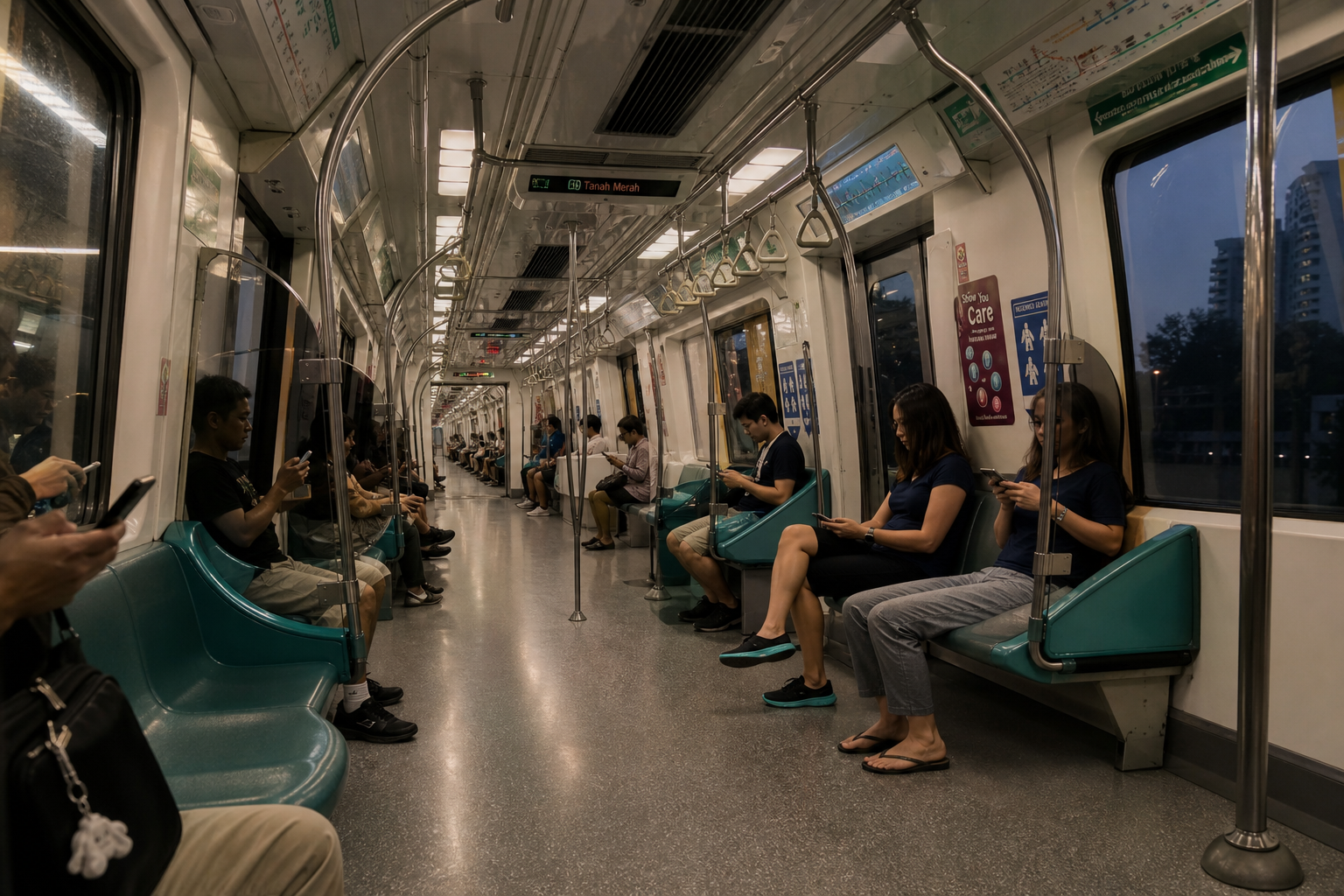
For years I treated the commute as dead time — something to endure with podcasts and email. Then I learned to use it as a door between two versions of the day.
The North-East Line knows me better than some acquaintances do. It knows I stand near the middle doors at HarbourFront, that I prefer the window side when available, that I read on good days and stare at reflections on bad ones. Forty minutes, two transfers if the connection at Dhoby Ghuan is unkind, a rhythm so familiar I could navigate it with my eyes closed — though I keep them open, because the view has its own small pleasures.
Transition rituals matter when work and home share the same city but not the same headspace. I began experimenting with boundaries after noticing I arrived home still rehearsing conversations from the office, still checking messages while my sister spoke, still mentally at my desk while physically at the dining table. The commute was already built into my schedule. It only needed intention.
Now the rules are simple. Between tapping out at the office gantry and tapping in at Serangoon, I do not send work messages unless something is genuinely urgent — and almost nothing is. I listen to music without lyrics or to the ambient sound of the train itself: brakes, announcements, the soft percussion of bags settling. On rainy evenings, which are frequent, I watch water streak the windows and let my thoughts slow to match the speed outside.
People-watching remains underrated. The student asleep against the pole. The couple sharing earphones. The uncle who reads the same newspaper page for three stops without turning it. Each is a reminder that private lives continue in public space — a theme I return to often in this journal. The commute is a gallery of unfinished stories.
There are difficult days when the ritual fails — when a delayed train compresses patience, when a crowded carriage presses bodies too close for comfort, when news on my phone intrudes before I reach the platform. I do not treat those days as defeat. They are data. They tell me when I need more rest, more margin, more honesty about what I can carry from work into home.
Singapore's transport system is often praised for efficiency, and the praise is deserved. But efficiency is not the only gift. A reliable forty-minute journey also offers forty minutes of enforced pause — time that cannot be productively repurposed without effort. In a city that values output, that pause is quietly radical.
By the time I walk from the station to my block, the mental shift is usually complete. Work stays on the train like a passenger disembarking at a different stop. Home receives someone present enough to notice the coriander on the balcony, the light in the corridor, the kettle waiting to be filled. The commute did not shorten. My relationship to it changed.