
The garden before the city wakes
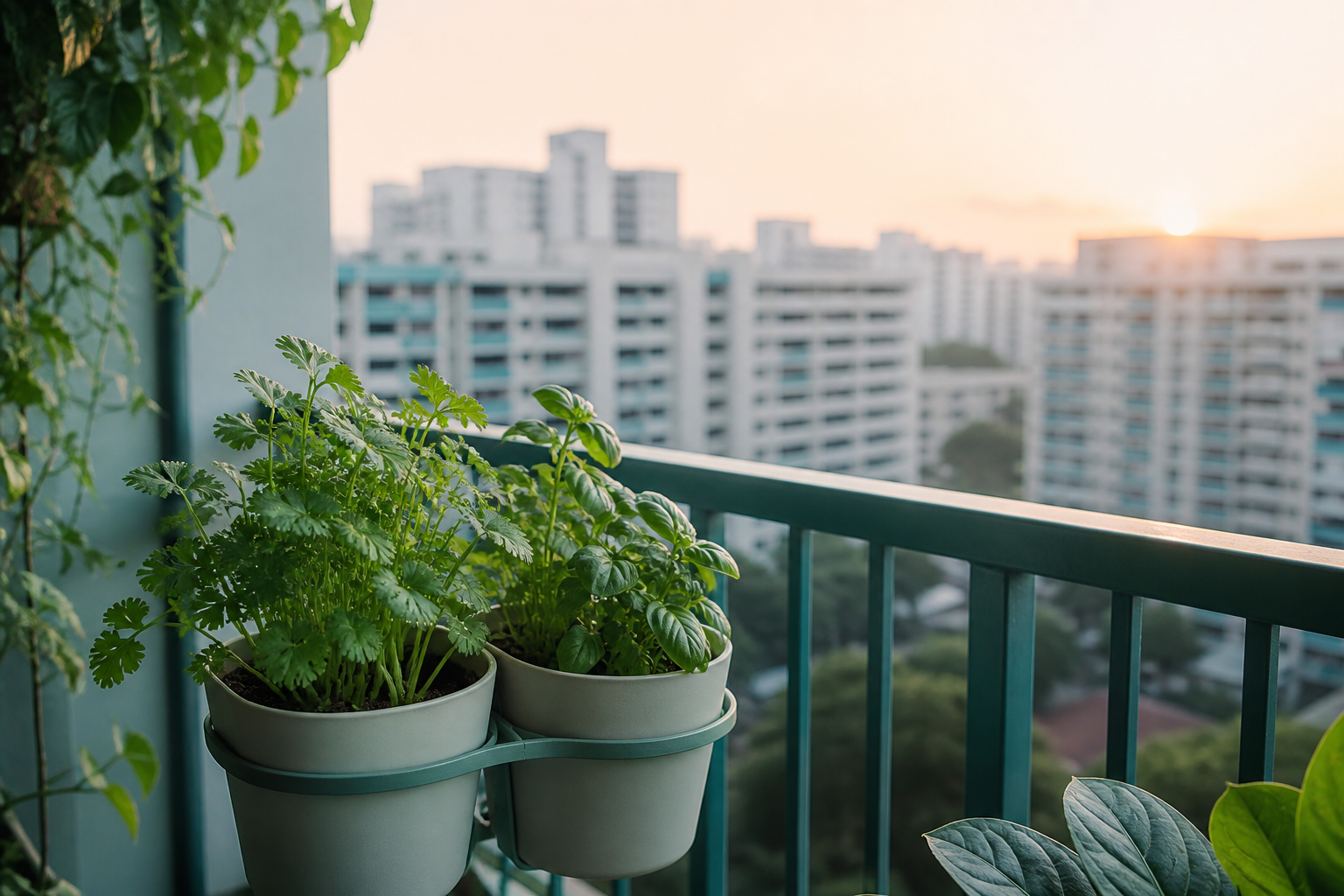
The best part of my day happens before the first notification arrives — twenty minutes on the balcony with soil under my fingernails and the city still holding its breath.
I did not set out to become a balcony gardener. The pots accumulated the way habits do: one basil plant from a neighbour who was moving, a tray of coriander seedlings from the nursery near Serangoon MRT, a stubborn chilli plant that survived three weeks of travel because my sister remembered to water it. Now the balcony looks like a modest farm suspended above Avenue 2, and I would not trade it for a larger flat without outdoor space.
Mornings begin at six-fifteen, sometimes earlier when the sky is already pale. I slide open the glass door and the air meets me — warm even at this hour, carrying the faint scent of detergent from someone's early laundry and the sweeter smell of frangipani from the block next door. The corridor is empty. A single cat watches from the parapet with the entitlement of creatures who know they belong everywhere.
I check each pot in the same order every day. Coriander first, because it wilts fastest and teaches urgency. Then basil, which responds to attention with extravagant growth. The chilli plant last — stoic, producing red fruit on its own schedule regardless of my anxiety. This routine is not efficient. It is meditative. My phone stays inside, face down on the kitchen counter, and for twenty minutes I am unavailable to everything except what is directly in front of me.
Writing happens after the garden, not before. I used to reverse the order and wonder why my sentences felt rushed. Now I understand: the balcony loosens something in my attention. By the time I sit at the desk with tea, my mind has already been practising the art of noticing — the curl of a new leaf, the precise shade of green that means healthy roots, the way shadow moves across the railing as the sun climbs.
Singapore does not always feel like a city that encourages slowness. Efficiency is built into our infrastructure and our expectations. But a balcony garden operates on a different clock — growth measured in weeks, failure accepted as part of the cycle, success celebrated in tablespoons rather than trophies. When I harvest enough coriander for a single bowl of soup, the satisfaction is disproportionate and entirely sincere.
Last Tuesday, an elderly uncle from the floor below stopped on his way back from the market. He looked at my pots, nodded approvingly, and offered advice about drainage holes I had been neglecting. We spoke for seven minutes about rain patterns and the best time to fertilise. I wrote down none of it and remembered all of it. Community, I am learning, often arrives as practical instruction from someone who has been paying attention longer than you have.
If you live in a flat without a balcony, substitute any small ritual that grounds you before the day claims your focus. A cup of tea by the window. Five minutes of stretching. A page of handwriting that no one will read. The content matters less than the container — a bounded space where you are allowed to move at human speed.
The city wakes whether we are ready or not. Buses begin their routes. Kitchens fill with the percussion of breakfast preparation. Somewhere a radio switches on to the morning news. I hear these sounds through the open door and feel the transition — from private morning to shared day. I wipe my hands, close the notebook, and step back inside. The garden will wait until tomorrow. So will I.